Muslims follow a religion of peace سلام , mercy رحمة and forgiveness مغفرة. Islam is a religion and a way of life for a fifth of the world’s population. The very serious incidents and charges connected to their religion are unrelated to the vast majority of Muslims. The teachings of Muhammad (S.A.W.W) and the Qur’an are the foundation of Islam.
Muslims believe in a singular, autonomous, and indivisible God who is not dependent on the rest of creation; they also believe in a single, absolute truth that transcends the world. Muslims have the belief that everyone will be held responsible for their deeds. Muslims also hold that everyone will rise again on the Day of Resurrection. For this reason, it is essential that they submit to God’s will.
Shahada الشَهادة (Witness of Faith)
“There is no God but Allah and Muhammad is His Messenger.”
“لا إله إلا الله , محمدٌ رسول الله “
/La Ilaha Illallah, Muhammadur rasoolullah/
The Shahada is a straightforward formula that all devout people recite as a statement of faith. With the exception of Allah, the One, the first section denies the existence of any other gods, whether they be wealthy, powerful, or otherwise. The second section then claims that Muhammad, a man just like us, is the messenger رسول who has come to give us wisdom.
Salah الصلاة (Prayer)
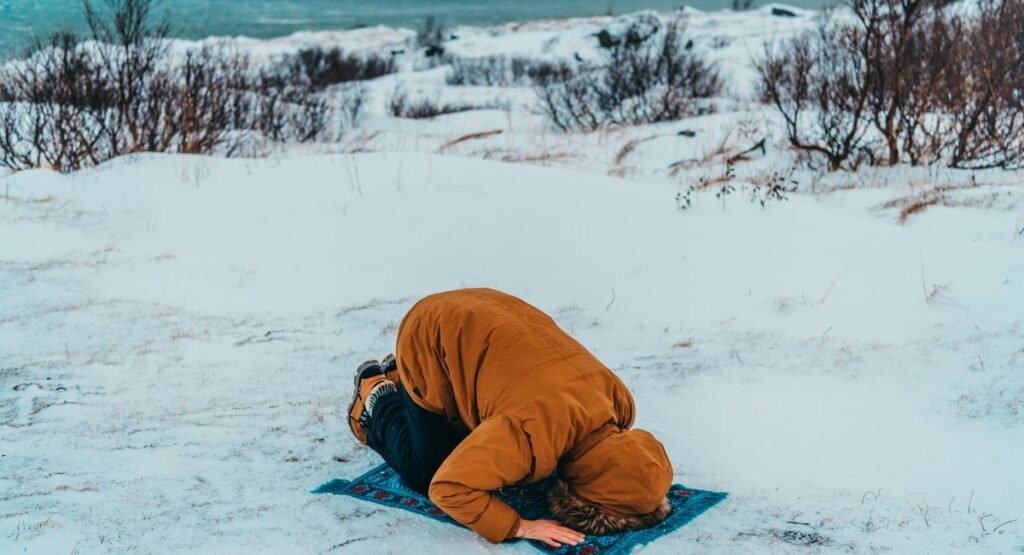
Five times a day, the mandatory prayers known as salat or salh are said. Salah serves as a direct conduit between the worshiper and the Almighty. Since there are no priests or hierarchical authorities in Islam, a scholarly individual who is familiar with the Qur’an and is typically selected by the congregation leads the prayers.
These prayers are delivered in Arabic, the language of revelation, and include passages from the Qur’an. The sunrise prayer (صلاة الفجر), noon prayer (صلاة الظُ·ر), afternoon prayer (صلاة العصر), sunset prayer (صلاة المغرب), and night prayer (صلاة العِشإء) are the five prayers. The daily rhythm is thus established by the five prayers.
Zakah (Almsgiving) الزكاة

Muslims have a financial obligation to pay zakah. Zakah implies “growth” as well as “purification.” Setting aside a portion of our belongings for the general public and those in need purifies them. This reduction promotes new growth and maintains equilibrium. At the conclusion of the year, each Muslim determines his or her Zakah based on their own wealth. The Islamic community has a responsibility to collect Zakah and distribute it equitably.
Sawm (Fasting) الصوم
All Muslims fast from sunrise to sunset throughout the month of Ramadan رمضان every year, refraining from eating, drinking, and having physical relations with their spouses. If they are fit and able, people who are ill, aged, or traveling, as well as women who are menstrual, pregnant, or nursing, are allowed to break their fast and make up the same number of days later in the year. Although many begin earlier, children start to fast (and observe prayers) at puberty.
Hajj (pilgrimage) الحج
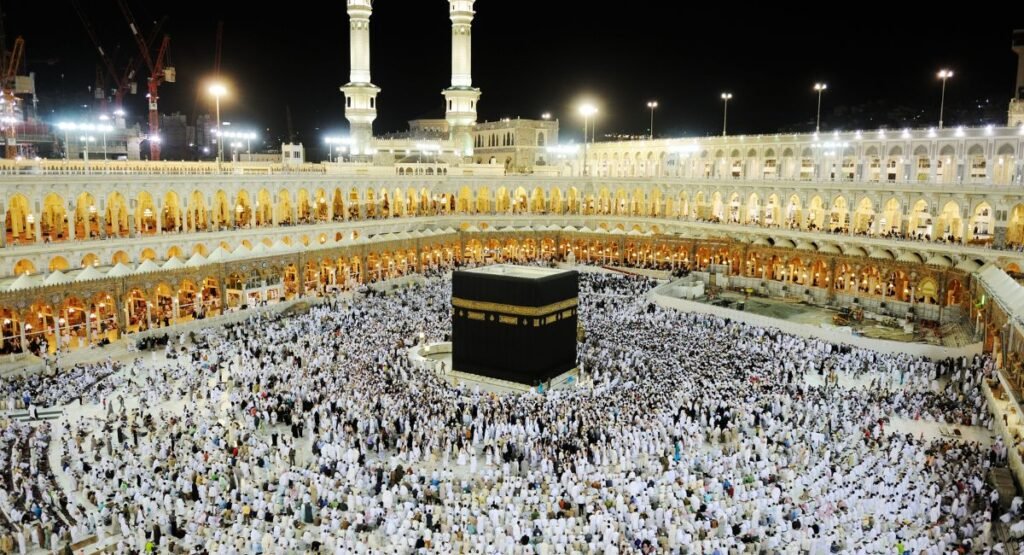
Only those who are financially and physically capable of making the Hajj, or pilgrimage to Makkah, are required to do so. Nonetheless, Makkah welcomes more than two million visitors annually from all over the world, offering a rare chance for people from other countries to interact. Pilgrims dress differently, wearing plain clothing that eliminates class and cultural differences so that everyone is treated equally before Allah الله.
Leave a Reply